Every team touched the same mortgage. Each saw a different version of the work.
Decido needed to move a mortgage from application to funding while six roles coordinated through disconnected systems, spreadsheets, and email. Mapping the full lifecycle revealed a shared file as the product’s foundation, shaped around different decisions at each handoff. As the sole designer, I turned that operating model into an MVP with tailored experiences and versioned underwriting logic, giving the team a common direction for the product.
A mortgage was moving through an invisible system
As the housing market climbed, lenders were receiving more applications than their teams could absorb. New regulation made the tension sharper: grow the business, but keep risk under control while doing it. That is difficult when nobody has a current view of the whole file or the whole pipeline.
Most incumbent lenders were still working across legacy systems and spreadsheets. Collaboration happened over email. Information lost context as it moved between departments. A delayed handoff created more internal work and could cost the lender a deal.
The interface was the visible edge of a coordination problem spanning the full life of a mortgage, from application through servicing.
Every role held a partial truth
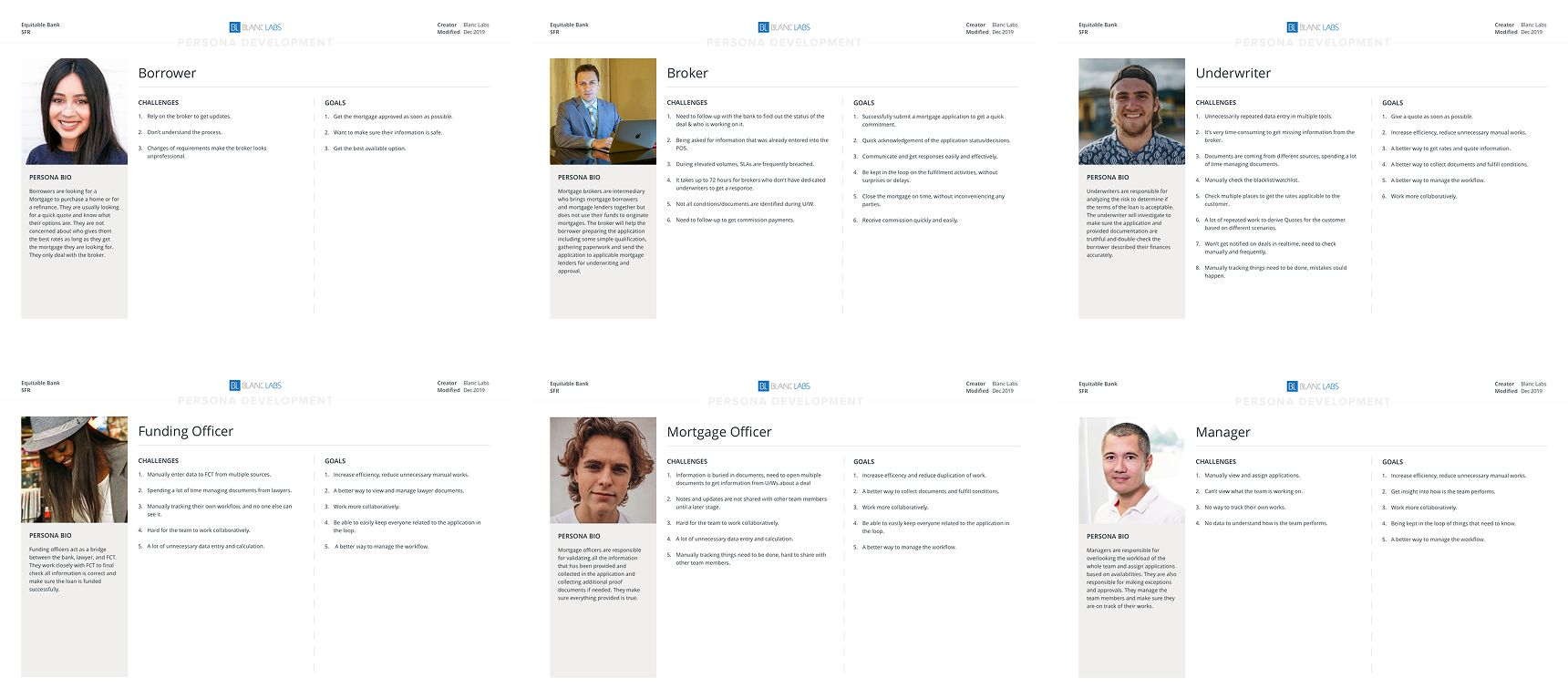
I analysed the conversion funnel, interviewed sales representatives, ran focus groups, and observed the people handling files across operations, underwriting, fulfillment, funding, and post funding. Each role understood its own decisions, but nobody had a current view of the whole file.
As the sole designer, I connected those perspectives into a current journey and a proposed future state. The research became useful when it changed the conversation with product and business stakeholders: we could discuss where the work lost context and what the product needed to preserve before discussing screens.
The map changed the product conversation
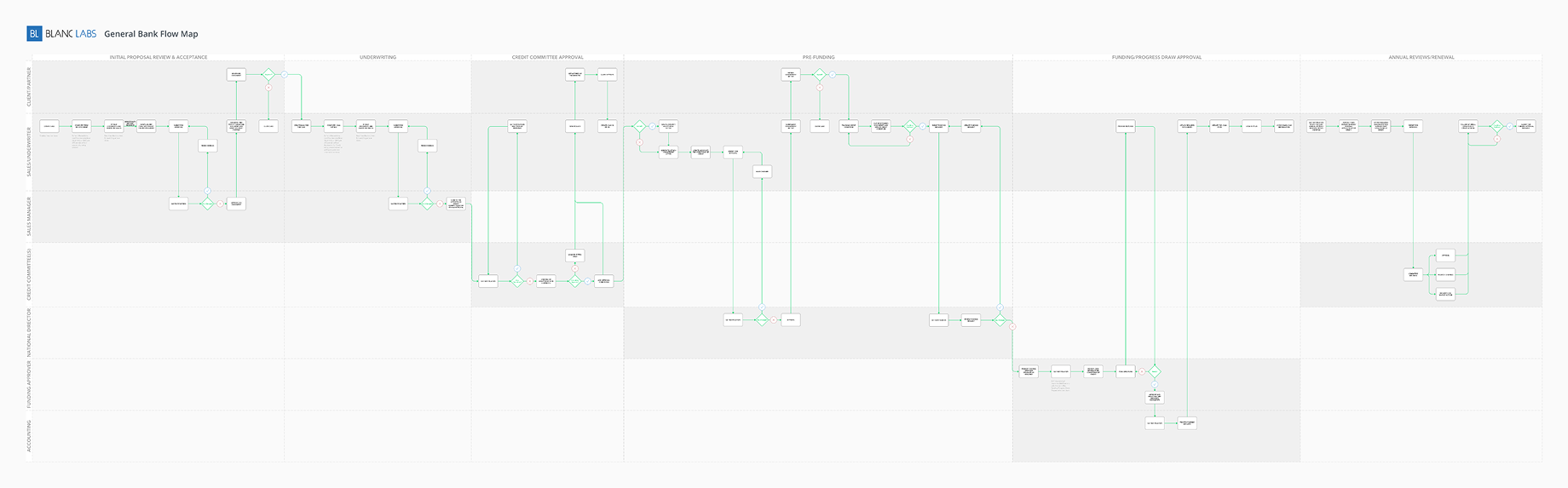
The end-to-end flow made the scale legible. It followed the client, sales and underwriting teams, managers, credit committee, funding, and accounting from the initial proposal through annual renewal.
Many of the handoffs were being managed through email. A better form or dashboard would only improve a fragment of the experience. The product needed to give the file a shared state, make its movement visible, and help every role understand what required attention next.
Shared state became the MVP
The map focused the MVP on shared work, current risk, and clearer handoffs for the bank, broker, and borrower. Documents needed to keep their context, status needed to be current, and underwriting logic needed to be inspectable.
That framing kept the product from becoming a digital copy of the existing process. It had to coordinate the work, expose the evidence behind a decision, and give the bank a way to manage how underwriting strategies changed over time.
A shared file, shaped for each role
The MVP connected the bank, broker, and borrower experiences around the same mortgage file. The shared model created continuity, while each interface stayed focused on the decisions its audience needed to make.
The bank
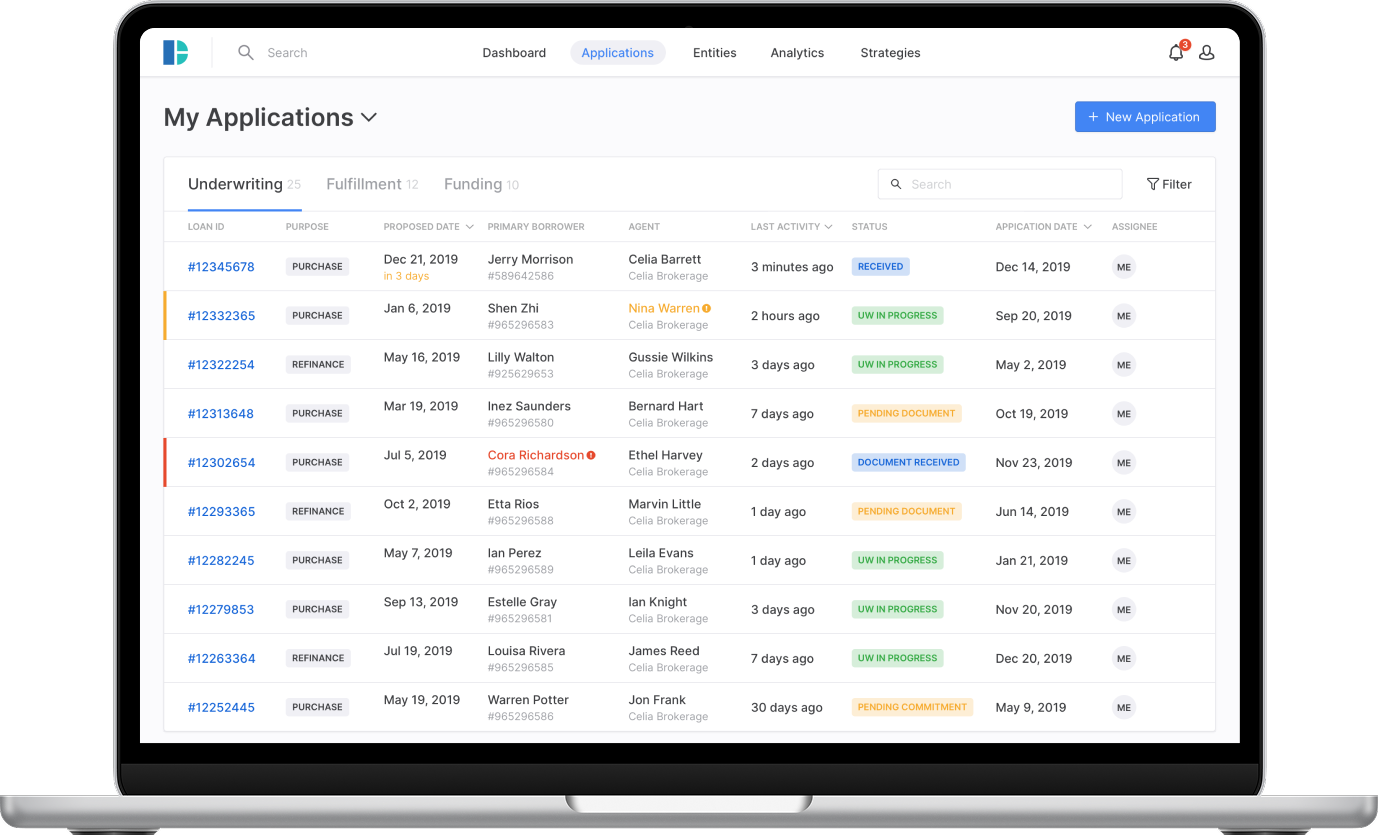
The bank needed an operational view of every application in underwriting, fulfillment, or funding. Status, last activity, and assignee were visible before opening the file. Colour-coded flags surfaced the applications that needed attention and turned the dashboard into a queue for decisions.
The same experience also went below the queue. An application workspace connected its workflow, actions, updates, documents, and risk indicators. Strategy management made underwriting logic versioned and inspectable across draft, staging, and production. A visual builder brought segmentation, calculations, policy rules, third party integrations, scoring models, and optimization into the same visible system.
The broker
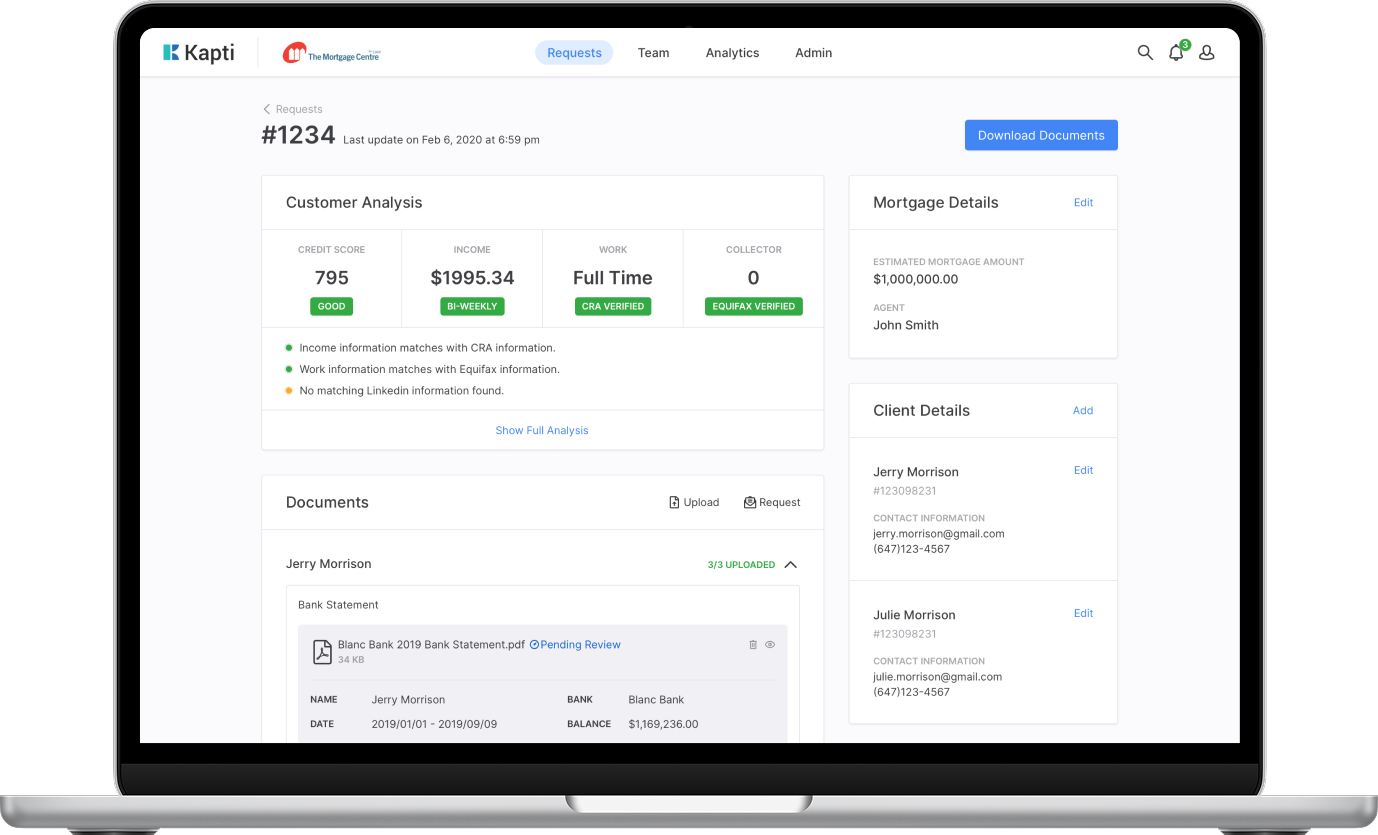
The broker needed confidence in the evidence before submission. Income could be checked against CRA, employment against Equifax, and credit pulled. Each result carried a visible verification state and a plain explanation of what matched. Documents attached to the person they belonged to, so the evidence kept its context.
The borrower
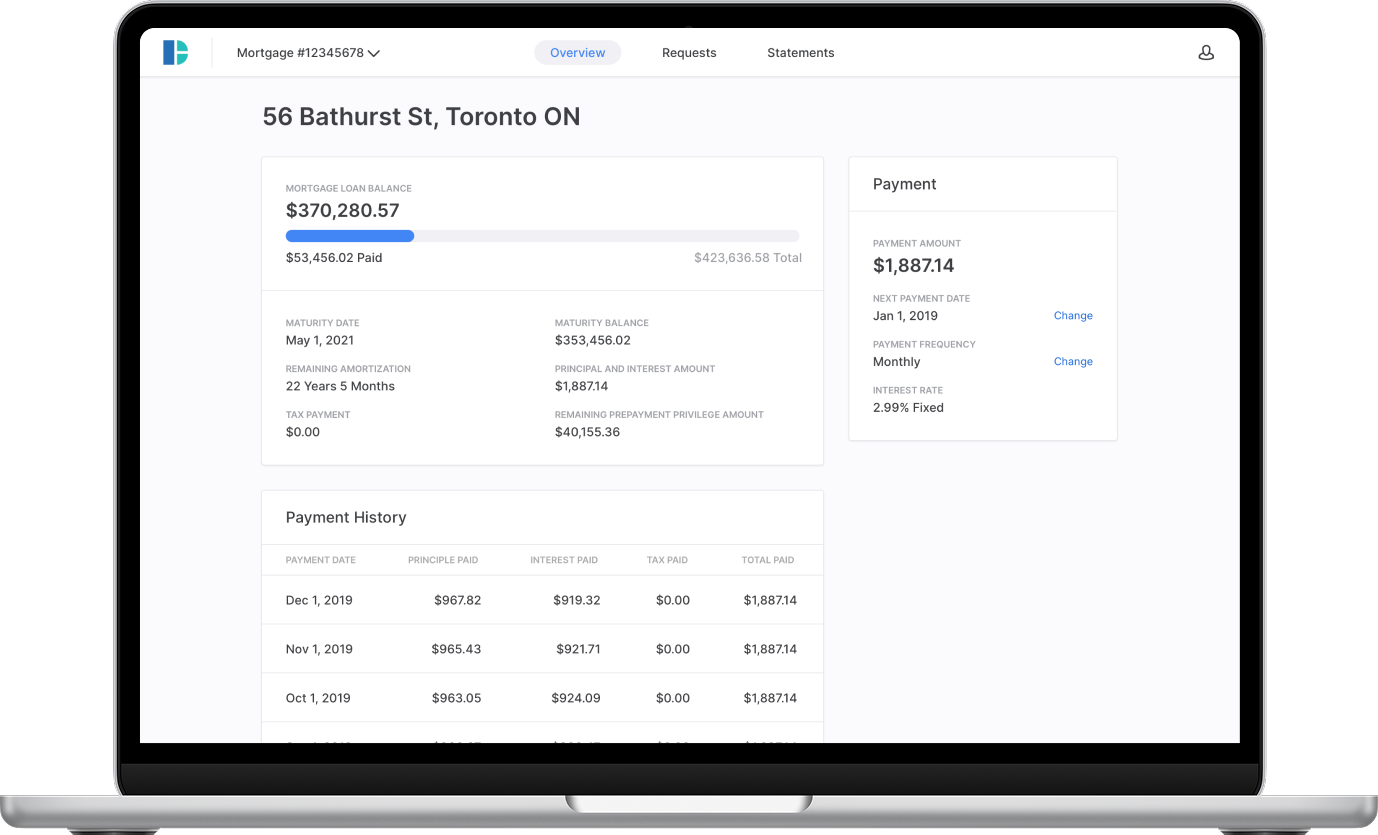
The borrower experience continued beyond the application form. A guided application broke the intake into eight visible steps. Once the file was in progress, the borrower could see its status, complete outstanding tasks, upload documents, and follow updates. After funding, balance, payment, maturity, remaining amortization, and payment history answered the questions people otherwise call the lender to ask.
What the MVP gave the team
The project produced a shared definition of the mortgage file and the responsibilities around it. Product, business, and engineering could evaluate the same future state, while the prototype made the operating model concrete enough to scope and build.
The outcome was a coherent MVP across six roles, with role specific decisions connected to the same status, evidence, and underwriting logic. Verified post launch business metrics are unavailable, so the claim stays with the direction and system the team could substantiate.
What I carried forward
Complex enterprise products often depend on a shared understanding of state. The value came from making the mortgage legible across boundaries: who had it, what had been verified, what was blocked, and what happened next.
It also changed how I think about consistency. Each role can have an interface shaped around its work while every surface tells the same underlying truth.
The deck
The full walkthrough covers the research, journey, and additional stages and screens that are not included here. Open the deck ↗